L-Citrulline And Nitric Oxide: What The Research Shows
L-Citrulline is an amino acid the body converts into L-Arginine, which the body then uses to produce nitric oxide, a compound that relaxes and widens blood vessels.
It is one of the more extensively studied ingredients in the circulation-supplement space, with a genuine mechanistic advantage over taking L-Arginine directly.
Why nitric oxide matters for circulation
Nitric oxide is a signalling molecule produced by the cells lining blood vessels (the endothelium). When released, it triggers relaxation of the surrounding smooth muscle, causing vessels to widen — a process called vasodilation. Wider vessels mean less resistance to blood flow and better oxygen and nutrient delivery to tissue.
Why L-Citrulline rather than L-Arginine directly
L-Arginine is the direct precursor to nitric oxide, so it might seem logical to supplement with it directly. The problem is that orally consumed L-Arginine undergoes substantial first-pass metabolism in the liver and gut before it ever reaches general circulation, significantly limiting how much makes it through.
L-Citrulline takes a different route: it largely bypasses this liver breakdown, gets converted to L-Arginine primarily in the kidneys, and research has found it can raise plasma L-Arginine levels more effectively than an equivalent oral dose of L-Arginine itself. This is a genuinely interesting pharmacokinetic advantage, not just marketing framing.
What the research supports
Studies on L-Citrulline supplementation, indexed on PubMed, have examined outcomes including blood pressure, exercise performance and vascular function measures. Results are generally more consistent for measurable vascular function markers than for subjective outcomes, and effect sizes tend to be modest rather than dramatic in a single dose.
The dose and timeline question
Applying this to Boostaro
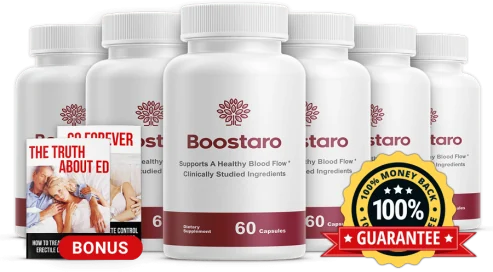
L-Citrulline is the ingredient carrying the primary nitric oxide claim in Boostaro's nine-ingredient formula, paired with Pine Bark Extract, which is separately studied for protecting nitric oxide from oxidative breakdown once it is produced. The exact L-Citrulline amount per capsule is not disclosed on the pages we reviewed, which limits how directly it can be compared to the multi-gram doses used in research.